 “Thank you so much for your help mediating yesterday’s case. This is the second difficult case that you have successfully mediated for me. Honestly, I did not think we would settle yesterday’s case. However, your skill, expertise, and patience carried the day. As a younger attorney who does not have a lot of personal injury experience, it is great knowing that you are available to help settle matters. You are an invaluable resource. I will definitely be asking for your services as a mediator in the future.” ~WAMS Client
Month: January 2013
The Buzz for 1/13
Can you guess which mediators are in the 5,000+ Club at WAMS? Only Harry Goldman and Larry Levy have mediated at least 5,000 cases during their careers. Both are still very busy and likely to be seen most days at WAMS, so please be sure to congratulate them when you next cross paths. It’s quite an accomplishment!
Mediator Focus: John Cooper
By: Penny Gans, WAMS Staff
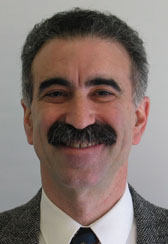
 John Cooper, a senior member of the WAMS mediation and arbitration panel, is best described by these words of a frequent WAMS client: “John Cooper is a ‘closer’. He evaluates cases well…gets to the point in negotiations and when he feels that a settlement can be had, he closes the case. If the parties are negotiable, John always gets it done.”
During his distinguished career, John has worn many hats. Not only has he been a member of the WAMS mediator panel since 1989, but he has also been a Washington State Court of Appeals law clerk, law firm partner, solo and swing arbitrator, private judge, seminar presenter and author. He has also earned high honors on the golf course and in the kitchen.
John grew up in Seattle and the San Francisco Bay area. He started college at Whitman and transferred to UC-Santa Barbara to take advantage of the very low in-state tuition while he worked his way toward a degree in Economics with high honors. He returned to Seattle and earned his law degree at the UW and spent a year clerking for the Honorable Jerome Farris at the Washington State Court of Appeals. He then joined the Seattle law firm that subsequently became Stafford Frey Cooper. As a practicing attorney, John represented plaintiffs and defendants in a wide range of cases, including negligence and product liability, insurance coverage, commercial, maritime, fidelity and surety law. Because of his experience on both sides of the legal fence, he is often asked to be the neutral or “swing” member of an arbitration panel. In 1989, John represented a client in a WAMS mediation and was subsequently invited to a mediation training session. After joining the WAMS mediation and arbitration panel, his activities as a WAMS neutral soon accounted for nearly 70% of his practice. John changed his relationship with his law firm to “Of Counsel” and became a full-time WAMS mediator/arbitrator.
John’s continued success is based on thorough preparation and his ability to listen carefully to all parties and let them know that he understands their positions. He particularly enjoys the psychology of mediation: reading the participants and “reframing” and delivering messages between them so that progress in the negotiations can continue. John welcomes challenging medical negligence and employment cases because of the interesting legal issues and high caliber of counsel. He thrives on hearing that “You’ll have your work cut out for you on this one!”. As a former trial lawyer, he feels strongly that a successful mediation can be especially therapeutic for the plaintiff, ending the necessity of reliving an unpleasant experience many times to attorneys, doctors and a jury. In John’s words, “I doubt any trial lawyer has ever had a client describe the trial experience as ‘a lot of fun’”. His goal is for all parties to be able to look back at the results of the chosen resolution process and say “that was a good thing.”
Away from WAMS, John and his wife Barbara enjoy traveling to Palm Springs and Hawaii in the winter, as well as taking trips with their eleven-year-old grandson Zach (who has accompanied them to Italy and the East Coast). John’s golf handicap is in the lower double digits, so when the WAMS calendar shows him as “N/A”, it likely means he’s on a golf course somewhere warm (although he also has an annual January golf outing at Bandon Dunes in Oregon.)
To recuperate from the stresses of work and golf, John enjoys spending time in his Bainbridge Island garden and creating delicious meals with his harvest and other local delicacies. A quick and tasty recipe ala John Cooper: Sauté a bit of diced pancetta and finely chopped shallots briefly in olive oil, then add bay scallops for 2-3 minutes; remove, reduce the pan juices with a bit of white wine, and serve with John’s garlic rosemary foccacia bread (recipe provided elsewhere in the newsletter).
John Cooper is truly a multi-faceted man for all seasons and cases and a highly valued asset to WAMS and our clients.
A Question of Style
By: Diane McGaha | Attorney Director
& Tamara Roberts | Mediation Director
WAMS Case Administrators are often asked by prospective clients and new staff members to distinguish one mediator’s “style” from another – and it has nothing to do with anyone’s choice of tie, watch or footwear. Particularly when a client is unfamiliar with one or more mediators under consideration, it can be helpful to know which mediator style might work best for a particular client or case.
It’s fairly well agreed within the “old school” ADR community that there are three main style categories used to describe how mediators may approach a given case: facilitative, evaluative and transformative. Of course, it’s important to understand from the outset that an experienced and well-trained mediator can’t be categorized by any single, universal definition. But it’s also undeniable that the dynamics of each case can be greatly influenced by the style employed by a mediator in his/her approach to resolution, whether by choice or direction. If a specific style/approach is specifically needed or requested by the parties to a prospective mediation, it’s helpful to share that request with the WAMS Case Administrator at the time of scheduling.
The first mediator style category is facilitative, which is generally regarded as the most common and traditional style of mediating. A facilitative mediator helps parties explore options for settlement by listening to all sides and helping them analyze the issues involved. The facilitative mediator does not typically offer specific settlement recommendations or voice an opinion about possible outcomes. He does, however, facilitate resolution by helping the parties come to an agreement based on information exchanges and compromise. When asked about mediators within WAMS who might be considered to be facilitative in their approaches to any given case, the usual WAMS response is that most mediators are trained to be facilitative. It’s the basic training model used by WAMS and most mediation training organizations for many years.
An evaluative mediator is generally known and expected to offer opinions and make specific recommendations about settlement values and outcomes should the case go to trial. The evaluative mediator is often retained precisely because the parties want an outside, neutral opinion about various aspects of a case that are pivotal and hotly contested. While both the evaluative and facilitative mediator will point out the strengths and weaknesses of the case to help parties understand the costs and risks of going to trial, the evaluative mediator will be much more directive and opinionated in her approach. Most retired judges who work as mediators are evaluative in style, as the authoritative judicial role is not easily
left behind. Obviously, there is an inherent risk that the evaluative mediator will express an opinion that isn’t received well by one or more mediation participants, even if the mediator is specifically asked and expected to opine. As soon as an evaluative mediator expresses an opinion, the risk is that the mediation will be ended by a party who doesn’t like the opinion. The use of an evaluative mediator should be by specific request, with a clear understanding by all involved of the expectations and obligations of the mediator and parties to be involved in an evaluative mediation. Some mediators are more comfortable with the evaluative mediation style than others, so be sure to convey any request for an evaluative mediator to the WAMS Case Administrator at the start of the mediator selection process – avoid asking the mediator during the mediation to be evaluative, as he may decline if not forewarned.
The last category of mediator style is transformative, wherein the objective is to transform the relationships between the parties through improved communication and guided interaction. The transformative mediator helps parties appreciate each other’s viewpoints and works to empower them to deal with future conflict in a healthier, more productive manner. Transformative mediators tend to handle many cases involving relationships between the parties beyond the dispute(s) at issue. Whether the relationships pertain to a family-owned business, partnership or organizational conflict, the transformative mediator lets the parties control the process. With guidance throughout to help each party see the other’s perspective and establish a framework for future conflict avoidance, transformative mediation goes beyond the objective of ending a specific conflict to bring some semblance of reconciliation to the relationships involved.
The reality is that WAMS mediators have been extensively trained to employ all three mediation styles when the case calls for creativity and adaptability. No WAMS mediator is interested in being typecast with a particular style that might preclude her consideration for a case. It is, however, undeniable that there are stylistic differences between mediators that can assist in the neutral selection process. At the end of the day, WAMS strives to match the mediator to the case in order to maximize the opportunity of settlement. In one recent case, the plaintiff related well to Tom Harris because of their shared interest in eclectic watches. In another case, Margo Keller’s golfing hobby landed her an appointment to mediate for an unknown client. The reality is that choosing a mediator is certainly not an exact science – but knowing more about mediator styles and what might best suit a particular client or case can only be beneficial. One size definitely does not fit all!
 Washington