A recent ruling by a Court of Appeals Division III panel in Breuer v. Presta (published opinion 26843-8-III) warrants consideration. It addresses the issue of what constitutes a “written, good faith request for mediation” for the purpose of tolling the statute of limitations in health care claims pursuant to RCW 7.70.110.
Author: usamwa
UIM Arbitration: 2009 Update
By: Pat Duffy | Mediator, Arbitrator
 As Congress considers the proposed Arbitration Fairness Act of 2009 to address several problems with the use of contractual arbitration clauses (see HR 1020), it’s a good opportunity to re-examine the evolution of arbitration in Washington and how changes in the act may impact arbitration as a method of resolving UM/UIM claims.
In the 1950’s, insurers began to voluntarily offer uninsured motorist coverage to their insureds in exchange for payment of an additional premium. In the late 1960’s, legislation was passed requiring insurers to offer uninsured motorist coverage. Later, some insurers began to offer policies that contained both uninsured and underinsured motorist coverage. In 1980, the legislature passed comprehensive uninsured/underinsured motorist legislation (which can be found at RCW 48.22.030).
Historically, automobile insurance policies have provided that UM/UIM injury claims would be decided by 3-person arbitration panels. Each party nominated one arbitrator and those two “party arbitrators” then agreed upon a neutral or “swing” arbitrator. Traditionally, a decision by a majority of the panel members was binding and the arbitrators’ fees were shared equally by the parties. This format satisfied each side’s desire to have its own “advocate” on the panel, although it certainly can be argued that the “party arbitrators” nullified each other and left the decision to essentially be made by the swing member of the panel.
But after the courts ruled in 1989 that payment of arbitrators under UM/UIM policies was the sole responsibility of insurers, there was a gradual transition by most carriers to the use of only one arbitrator. Using a sole arbitrator has undeniably saved insurers a substantial amount of arbitrator hearing fees.
Whether accurate or not, a perception began to develop with insurers that arbitrators’ awards were overly generous in favor of claimants. This view led to the advent of “sue me” clauses, which are now common in UM/UIM policies. While most policies have continued to provide for arbitration, it was to be utilized only if both parties agreed to arbitrate. If not, the only option for claimants was to initiate a lawsuit for damages against the insurer. A typical policy might now read as follows:
If we and the insured do not agree…the dispute maybe resolved:
a) In a binding arbitration proceeding, but only if both sides agree to arbitration, or
(b) By civil lawsuit brought by you in a court of competent jurisdiction.
Advocates for claimants have decried these changes and attempted, so far unsuccessfully, to have “sue me” clauses declared void. The plaintiff’s bar has consistently argued that the high expense and protracted delay in getting to trial is placing an unfair burden upon insureds. In turn, the plaintiffs’ bar has been soundly ridiculed for its so-called hypocrisy in attacking the right to trial by jury.
As of this writing in 2009, claimants and insurers continue to arbitrate many, if not most, uninsured/underinsured cases. Both sides have an interest in getting claims resolved without the delay and expense of a jury trial, and there is little argument about the cost and time savings associated with UM/UIM arbitration. In fact, many arbitrators like me are now seeing parties agree to resolve third party claims in binding arbitration as an alternative to trial. There is often a “high-low” agreement, not disclosed to the arbitrator, which provides for the award to be modified if it falls outside the range set by the parties.
I think it’s fair to say that arbitration is still widely viewed as an expeditious and cost-effective method of resolving UM/UIM claims. The benefits of arbitration are endorsed by Civil Rule 1 that states, in part:
These rules…shall be construed and administered to secure the just, speedy and inexpensive determination of every action.
Arbitration should continue to serve as a popular method of dispute resolution for UM/UIM claims, since the benefits of arbitration are many, including:
- Reliability of the hearing date
- Privacy – no public record
- Special expertise of neutral
- Parties select neutral
- Expeditious compared to trial
- Achieves finality
- Very narrow scope of appeal
- Usually less costly than trial
The Arbitration Fairness Act will potentially impact UM/UIM arbitration only insofar as some policies may be considered to be “anti-consumer” by virtue of any discovery, timing, arbitrator or cost constraints that may still be used by some carriers. For the most part, however, UM/UIM arbitration in Washington is likely to remain a good choice for many disputed claims.
Focus: Tacoma WAMS
By: Diane McGaha | WAMS Director
As many clients know, Washington Arbitration & Mediation Service was founded in Seattle and maintained offices in Seattle and Spokane for many years. But in 1992, when the Spokane office closed and Diane McGaha was recruited back to WAMS as the Managing Attorney (after 3 years in private practice), the decision was made to open a satellite office in Tacoma.
The rationale for a Pierce County office was simple: Diane would only leave her law practice and return to the world of ADR administration if WAMS would allow her to open a Tacoma office.
The first WAMS office in Tacoma opened in 1992 in the old Norton Clapp Law Center in downtown Tacoma. The location was chosen because WAMS had historically collaborated with the University of Puget Sound law school (also in that building at the time) to allow students to observe hearings, participate in training opportunities and provide mentors and judges for negotiation competitions. With the sale and pending move of the law school to Seattle University, WAMS relocated from downtown to the Old Town area.
For ten years, the Tacoma WAMS office enjoyed a view of Commencement Bay and the Ruston Way waterfront, but WAMS eventually outgrew the space and relocated to the Proctor District. Although the convenience of Starbucks downstairs was a definite positive aspect to the Proctor location, ongoing problems with parking, security and the HVAC system required another move.
As of October 1, 2008, Tacoma WAMS has been located in the Port of Tacoma office building, formerly known as the World Trade Center and now the Fabulich Center. Ample parking, easy access from I-5 and close proximity to Pick-Quick burgers and Fife City Bar & Grill (two of the best eating establishments in the Puget Sound area) were important factors in the relocation decision. The new WAMS office offers free wi-fi to clients and has 7 conference rooms available, with an additional 3 rooms available in the building if needed.
The Buzz for 1/09
The WAMS staff and mediators were asked to support Food Drives at the end of 2008 in lieu of the traditional holiday party. One such effort was spearheaded by WAMS Lemon Law Director/Case Administrator Alisa Bacon, who collaborated with her grandmother on Vashon Island to provide holiday food items donated by WAMS to the Vashon-Maury Community Food Bank. Thanks to WAMS, Alisa and her grandmother, over 250 families served by the Vashon Food Bank will have special holiday food baskets this year.
In other news, Melody Malloy married Sam Brenden on August 9, 2008. Congratulations! She has also transitioned to working full-time in the Seattle WAMS office.
Mark Zimmerly accepted a position as a Case Manager at the Salvation Army’s William Booth Center. He is working full-time in their transitional program for homeless men. Best of luck!
Great Job! Harry Goldman
 “Mr. Goldman did a good job in bringing the sides together, was observant and keyed right into the significant facts and failures of each side.”
-WAMS client
Supporting the Lawyer’s Complex Role in Mediation
By: Kathleen Wareham | Mediator, Arbitrator
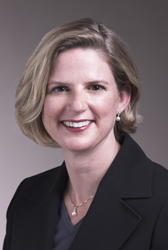 Mediation offers many benefits to clients, providing them an efficient, effective means of resolving their legal disputes. One reason mediation works is that it supports the complexities of the attorney-client relationship and helps lawyers satisfy their dual duties to both advocate for and advise clients about risks and benefits of settlement. When the mediation parties and their lawyers clearly understand the lawyer’s role and duties to the client during mediation, they can work more effectively with the mediator and fully utilize the mediation process.
Washington’s Rules of Professional Conduct, revised in September 2006, provide lawyers clear direction to consider social, emotional and economic consequences of litigation, as well as alternatives to litigation such as mediation. In fact, when a legal matter “is likely to involve litigation, it may be necessary under Rule 1.4 to inform the client of forms of dispute resolution that might constitute reasonable alternatives to litigation.”1
Multiple Roles for the Lawyer
The Preamble to the RPCs describes multiple roles for a lawyer representing a client: advisor, advocate, negotiator and evaluator. These roles may seem in conflict with each other. As an “advisor,” the lawyer “provides a client with an informed understanding of the client’s legal rights and obligations and explains their practical implications.” As an “advocate,” the lawyer “conscientiously and ardently asserts the client’s position under the rules of the adversary system.” As a “negotiator,” the lawyer “seeks a result advantageous to the client but consistent with the requirements of honest dealings with others.”2
A lawyer acts in all three of these roles in mediation. In both mediation and litigation, the lawyer is helping the client by advocating and asserting the client’s position. In mediation and in settlement negotiations, the lawyer takes on the negotiator role, to seek a result advantageous to the client, and as an advisor, to explain practical implications of a client’s legal rights and obligations.
Lawyers Must Give Candid, Straightforward Advice
The RPCs specify the duties expected of lawyers in their role as advisors.
“In representing a client, a lawyer shall exercise independent professional judgment and render candid advice. In rendering advice, a lawyer may refer not only to law but to other considerations such as moral, economic, social and political factors that may be relevant to the client’s situation.”3
These non-legal factors are part of the lawyer’s assessment and advice because pure legal advice, in a vacuum, fails to fully meet the client’s needs. As described in Comment 2 to Rule 2.1 “Advice couched in narrow legal terms may be of little value to a client, especially where practical considerations, such as cost or effects on other people, are predominant.”
The rules encourage client need-centered guidance and “candid” advice. Comment 1 to Rule 2.1 reminds lawyers of the standards they are expected to meet and of the importance of honest, straightforward advice, even when it is difficult to give. This comment provides: “Legal advice often involves unpleasant facts and alternatives that a client may be disinclined to confront. In presenting advice, a lawyer endeavors to sustain the client’s morale and may put advice in as acceptable a form as honesty permits. However, a lawyer should not be deterred from giving candid advice by the prospect that the advice will be unpalatable to the client.”
The comments acknowledge this is not always easy. The duty to advocate and assert the client’s interests complicates the advisory role even more. By providing broad advice, including consideration of moral, economic, social and political factors, lawyers can strike the balance and fulfill the duties to clients expected by the rules — both to assert the client’s interests through advocacy and also to give honest and candid advice.
Settlement Is a Client Decision
While the lawyer works to both advocate and advise the client toward resolution of a legal dispute, under Rule 1.2(a) the lawyer must be mindful of the fact that decisions concerning the objectives of the representation, the means to pursue the objectives, and the ultimate decision regarding settlement of a legal dispute, are client decisions.
The lawyer’s role is to advise the client regarding the possible objectives of representation, the potential means to pursue the objectives and the pros and cons of particular settlement options. Fulfilling these duties to the client is a complex task. The lawyer must remember that the client is the decision maker under Rule 1.2(a), but also remember to give the client complete, broad advice pursuant to Rule 2.1.
Mediation: An Ideal Forum
Advising the client about mediation as a means of pursuing the client’s legal objectives is not only encouraged by the RPCs, it is a way for the lawyer to strike the balance between giving advice, advocating for the client and listening to the client. Mediation supports these complex communication tasks for the lawyer. A professional mediator helps the lawyer give the client advice and yet abide by the client’s decisions regarding the objectives and means of the representation and the client’s ultimate decision regarding settlement.
The RPCs provide lawyers with ethical guidance for fulfilling the complex roles of both advocating for and advising a client. More than establishing ethical duties, the rules help promote resolution of legal disputes — the ultimate purpose of litigation — by defining the lawyer’s role as both advisor and advocate.
Perhaps mediation has become the paramount method of dispute resolution not just due to economic pressures and crowded court dockets, but because it best supports the tensions in the litigation process between lawyers’ dual roles as advocates and advisors. Following the ethical guidance of the rules when considering, preparing for and participating in mediation helps lawyers fulfill their duties to their clients and effectively resolve their clients’ legal disputes.
1 Comment 5 to Rule 2.1.
2 Preamble [2].
3 Rule 2.1.
Kathleen Wareham has been a panel member of WAMS since 2004. She mediates disputes, utilizing more than 20 years of legal experience in negligence, personal injury, civil rights, wrongful death, and complex probate, guardianship and trust matters. This article draws on material from Ms. Wareham’s chapter on “Washington Mediation Ethics” that will appear in the update to the Washington Legal Ethics Deskbook (Wash. St. Bar Assoc.) scheduled for release in January 2009.
Mediator Focus: Pat Duffy
By: Natalie Snyder | WAMS Staff
The path to becoming a professional mediator is somewhat unique for each member of the WAMS mediation panel. In the case of Pat Duffy, the opportunity to become a mediator came from WAMS in 2001, in the form of a request that he consider being trained to join the panel. Pat practiced plaintiff’s personal injury law in Tacoma from 1975-1992, then moved his practice to Sumner in 1992. He utilized mediation in his own law practice before ever becoming a mediator.
“Pat Duffy had been a WAMS client for many years, so the staff and mediators at WAMS had numerous opportunities to see first-hand what an exemplary lawyer and person he is. He always treated his clients, colleagues and support staff with the utmost respect and courtesy, so we hoped he would become a WAMS mediator as soon as possible,” according to WAMS President and House Counsel, Diane McGaha. “He’s just the kind of person you enjoy being around,” she says.
“Bringing people together” is what mediation is all about for Pat Duffy. As Pat says, “I like people, I like stories, and I’ve heard many good ones over the years. I guess that is part of my Irish heritage.” Pat got much of his professional inspiration from his father, a family doctor who practiced medicine for many years in Pierce County. Pat says his father encouraged him as a young man in ways that made him want to be a person who makes a difference. “I like to learn a little bit about the plaintiff and often ask about their background, family, education and work. This helps to put the person at ease, since walking into a formal office setting and meeting new people can be an intimidating experience for some.”
The challenges of the adversarial process and the different approaches taken by plaintiff and defense counsel are what keep Pat enjoying his mediation work. “I try to understand the issues and hopefully identify areas of agreement in order to resolve the dispute.” Pat’s favorite aspect of the mediation process is that “the result of a mediation is more predictable than a jury verdict.” As a mediation client himself, he also understands that “there are benefits to the clients and attorneys – one of which is minimizing the expense” of litigation.
During his off time, Pat enjoys traveling with his wife (Karen) to a warm spot to play golf. Pat and Karen have three adult daughters, Deirdre, Clare and Tory, who still live in the Puget Sound area. As an active member of the Sumner Rotary Club, Pat also enjoys being involved locally and internationally in support of schools and food programs.
Pat Duffy serves as a WAMS mediator and arbitrator with expertise in the areas of serious personal injury, employment, auto accidents and UM/UIM arbitrations.
“I like people, I like stories, and I’ve heard many good ones over the years. I guess that is part of my Irish heritage.” – Pat Duffy
The Buzz for 6/08
WAMS House Counsel, Diane McGaha, recently attended an ADR conference in Perth, Australia, where she participated in a round-table discussion of marketing for new mediators. ADR in Australia is still a relatively new concept in some ways, but in the area of mediator certification, Australia is at the forefront of the industry. Legislation is pending that would establish national certification standards for mediators to ensure a minimum level of competency for anyone practicing as a mediator. Two of the most interesting growth areas for mediation in Australia involve disputes about aboriginal rights and business transition planning for family-owned wineries.
In other news, we are pleased to announce the addition of Melody Malloy to our Seattle staff. Melody joined us in March 2008 as a hearings assistant. She gave birth to a baby girl, Saige Christine (8 lbs. 9 oz.), on May 11, 2008.
Tamara Roberts, case administrator, gave birth to a healthy baby boy, Aaron Lee (6 lbs. 15 oz.) on November 21, 2007. Congratulations!
Great Job! Margo Keller
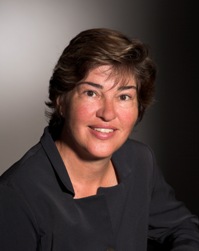 Margo Keller, WAMS mediator/arbitrator, is an adjunct professor of Dispute Resolution at Seattle University School of Law.
Great Job! Kathleen Wareham
“Thank you for everything you did to help my family reach an agreement yesterday. Once my husband and kids learned of the agreement they jumped for joy. This estate turmoil has affected them in a very bad way. I look forward to rebuilding my life with them. I think you are very kind and talented. Thanks again for your hard work.”
– WAMS client
 Washington